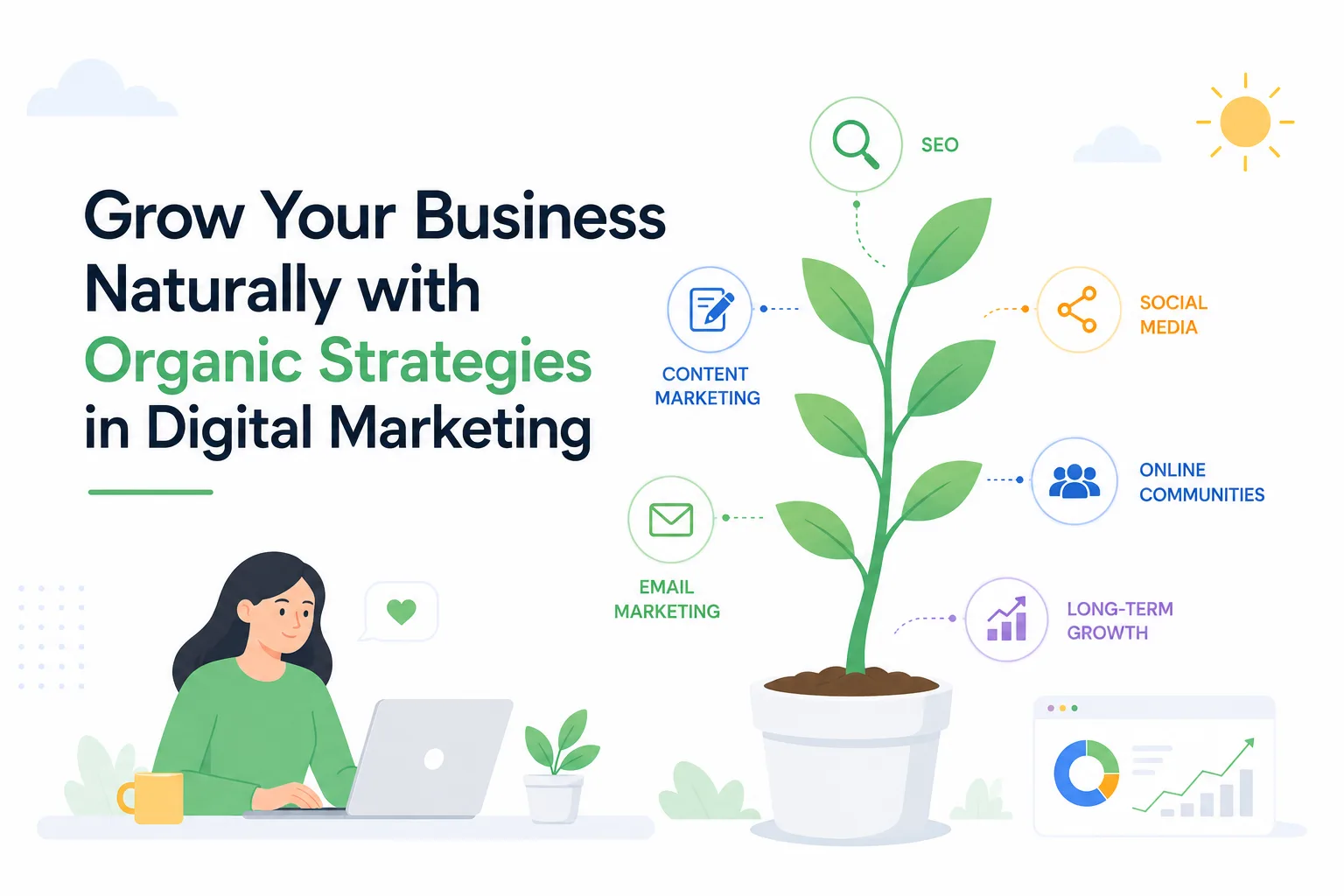
In the fast-moving world of digital marketing, organic strategies play a vital role in building long-term visibility, credibility, and audience trust. Unlike paid ads that stop once the budget ends, organic methods keep delivering results over time — without ongoing spending. Let’s dive into what organic strategies mean, why they matter, and how to implement them effectively.
What Are Organic Strategies in Digital Marketing?
Organic strategies in digital marketing refer to methods used to attract and engage audiences without paying for ads. These strategies are based on creating valuable, relevant content and optimizing your online presence to appear in search results or attract followers naturally.
Examples of organic methods include:
- Search Engine Optimization (SEO)
- Content Marketing (blogs, videos, infographics)
- Social Media Engagement (without boosting or ads)
- Email Newsletters
- Community Building (forums, WhatsApp, Telegram groups)
- Local SEO via Google Business Profile
In short, organic strategies help brands build an online presence, drive website traffic, and increase engagement — all without paid media. While they take time and consistent effort, the long-term benefits are substantial.
Why Are Organic Strategies Important?
Organic digital marketing is important for several reasons:
- Cost-Effective: It doesn’t require a big ad budget. Small businesses and startups can grow steadily with minimal investment.
- Long-Term Results: A well-optimized blog post or YouTube video can bring traffic for years.
- Builds Trust: Organic reach feels more authentic to audiences. It builds brand credibility.
- Search Visibility: Ranking organically on Google improves discoverability and brand authority.
- Better ROI Over Time: Compared to paid ads, the cost per result of organic strategies decreases as content ages and continues to perform.
Organic marketing is essential for sustainable growth. Paid campaigns may bring instant results, but organic builds a foundation that supports all your marketing efforts.
Who Should Use Organic Strategies?
Organic digital marketing strategies are ideal for:
- Small and medium businesses who have limited marketing budgets
- Startups looking to build a brand presence before spending on ads
- Freelancers and service providers wanting to establish credibility and generate leads
- Educational institutions and NGOs who rely on awareness campaigns
- Local businesses (restaurants, salons, fitness centers) targeting nearby audiences
- Personal brands like coaches, artists, and creators growing their online community
Anyone who wants to build meaningful digital relationships and grow traffic steadily over time should prioritize organic strategies.
Where Can Organic Strategies Be Applied?
Organic strategies can be applied across various platforms and tools, such as:
- Google Search (via SEO and content optimization)
- YouTube (by optimizing video titles, thumbnails, descriptions)
- Instagram and Facebook (through consistent posting, reels, engaging stories)
- LinkedIn (for B2B networking and authority building)
- Google Business Profile (for local discovery and map ranking)
- Quora and Reddit (by answering questions in your niche)
- WhatsApp Communities (for local engagement and updates)
- Email marketing tools like Mailchimp, Sender, or ConvertKit
These platforms support organic reach if used consistently with valuable content.
When Are Organic Strategies Most Needed?
Organic strategies are most useful when:
- You’re starting a new business with limited funds
- You want to build long-term SEO traffic that doesn’t depend on ads
- You’re in a low-competition niche where ranking is easier
- You’re launching evergreen content (e.g., FAQs, tutorials, how-to guides)
- Your goal is to build an email list or online community
- You want to support paid campaigns with trust-building content
Even if you use paid ads, organic content should run alongside to maximize impact and improve marketing efficiency.
How to Implement Organic Digital Marketing Strategies: Step-by-Step
Here’s how you can create a strong organic presence:
1. Start with Keyword Research Use tools like Google Keyword Planner, Ubersuggest, or AnswerThePublic to find what your audience is searching for.
2. Create High-Quality Content Write blog posts, film videos, design infographics, or share tips on social media. Focus on solving real problems.
3. Optimize for SEO Use proper title tags, meta descriptions, internal linking, and image alt texts. Ensure your website is mobile-friendly and fast.
4. Stay Active on Social Media Post regularly, engage in comments, use stories, reels, and hashtags to boost organic visibility.
5. Build Email Lists Offer a freebie (like an eBook or checklist) in exchange for email signups. Send helpful updates consistently.
6. Encourage Reviews and Testimonials Ask satisfied clients or customers to leave Google reviews or share their experiences.
7. Track Your Results Use Google Analytics, Search Console, and social insights to see what’s working. Improve accordingly.
Organic marketing is a journey — not a quick fix. But if you’re consistent, honest, and customer-focused, you’ll see powerful results that compound over time.
Organic vs. Paid Marketing: A Quick Comparison
A common question is how organic and paid marketing stack up against each other. The table below breaks down their key differences to help you decide where to focus your efforts.
The Bottom Line: Don’t feel like you have to choose just one. The magic truly happens when organic and paid work together. Organic content is your foundation, it’s what builds real trust and loyalty. When you run paid ads, you can send people to your high-value organic content, which helps build trust even faster and can make your ads more effective.
The Latest Organic Marketing Trends (2026)
The world of organic marketing is always changing. Here’s what’s popular and important right now.
Search Everywhere Optimization
People are searching for information everywhere: on TikTok, YouTube, Reddit, LinkedIn, and using AI tools like ChatGPT and Perplexity. Your organic strategy needs to be visible on all these platforms, not just Google.
Creating a Strong Personal Brand
In a noisy online world, authenticity is your secret weapon. Build an organic personal brand rooted in transparency, real values, and human connection. Don’t be afraid to share your journey, including your progress and challenges. This genuine approach builds trust in a way that no polished ad ever can.
The “Golden Age” of Video Content
Short-form videos are dominating social media. Platforms like TikTok, YouTube Shorts, and Instagram Reels offer the most organic reach for free. You don’t need expensive production. Authentic, behind-the-scenes videos and simple tips often work better than highly polished content.
User-Generated Content (UGC) is Gold
Let your customers do the talking. UGC, like reviews, photos, and comments, is powerful organic content that builds incredible trust. In fact, 56% of brands now prioritize UGC as a core part of their marketing strategy. When real people share their experiences, it feels authentic and acts as social proof, helping you attract new customers.
The Rise of AI in Organic Strategy
AI is changing how content is created and consumed. AI tools slash the cost of content creation, so search engines and people now expect higher quality. Your content needs to offer net-new information, original data, or fresh insights that AI can’t just summarize from elsewhere. For organic social media, some experts say, “Your B2B organic social strategy is now an AI strategy”.
Practical Organic Marketing Tactics
- Find Your Perfect Audience: Don’t assume you know your audience. Use tools like Google Analytics, conduct surveys on social media, and check out your competitors to understand where your potential customers hang out and what they care about.
- Build Helpful Content Partnerships: Team up with businesses that serve the same audience as you but aren’t direct competitors. For example, a wedding photographer could partner with a florist to co-host a giveaway or a free workshop. It’s a cost-effective way to grow your audience.
- Create an Evergreen Email List: Your email list is one of your most valuable marketing assets. Start building it from day one. Unlike social media, where algorithms control your reach, your email list gives you direct access to your audience.
- Write for Real People and Search Engines: When you create content, always keep your ideal customer in mind. Answer their questions and solve their problems in a simple, natural way. Then, use clear headings, include relevant keywords, and write a helpful meta description. This way, your content satisfies both human readers and search engine bots.
- Repurpose Your Best Content: Make your content work harder for you. Turn a well-performing blog post into a short video, an infographic, and a few social media posts. This helps you get the most value out of every piece of content you create without burning out.
Common Organic Marketing Mistakes to Avoid
- Inconsistent Posting: Confuses algorithms and makes your brand seem inactive. Stick to a regular schedule.
- Low-Quality Content: Posting just for the sake of posting can actually harm your reputation. It’s always better to share one truly valuable piece of content than ten forgettable ones.
- Ignoring SEO Fundamentals: Even the best content won’t be found if you skip the basics like optimizing titles, meta descriptions, and using proper headings.
- Spreading Yourself Too Thin: Trying to be active on every single platform often leads to burnout. It’s more effective to focus on one or two channels where your audience is most active and do them really well.
The Future of Organic Marketing
Looking ahead, one of the biggest shifts is how AI is changing search. Instead of just getting 10 blue links on Google, users are asking AI tools like ChatGPT and Perplexity for direct answers. This means your brand needs to be seen as a credible source that AI wants to cite.
To prepare for this AI-driven future:
- Create Original Data: Conduct your own surveys, studies, or market research. This “information gain” is your new competitive advantage.
- Build Your Brand’s Authority: AI models will prioritize information from brands that consistently deliver trustworthy, accurate content. Focus on becoming a go-to expert in your field.
Organic marketing is not just a strategy; it’s an investment in a loyal community and a resilient, growing brand.
Frequently Asked Questions (FAQs)
Here are answers to 10 common questions to help you navigate your organic marketing journey.
1. What is organic marketing in simple words?
It’s a way to attract customers to your business for free by creating helpful, interesting, and valuable content, rather than paying for ads. It’s about earning attention, not buying it.
2. How is organic marketing different from paid marketing?
Organic marketing focuses on long-term growth by building trust and authority through content and SEO. Paid marketing focuses on getting immediate results like traffic and sales by paying for ad space. Organic results take time but last longer, while paid results are fast but stop when you stop paying.
3. Does organic marketing really work for small businesses on a tight budget?
Absolutely! It’s often the best place to start because it requires minimal upfront cash. It’s perfect for building a loyal following over time without a big ad spend.
4. How long does it take to see results from organic marketing?
It’s not an overnight process; it’s a long-term strategy. Generally, you can expect to start seeing some initial results within 3 to 6 months, but it takes consistent effort for 6 to 12 months to see significant, sustainable growth.
5. What’s the difference between SEO and organic social media?
SEO (Search Engine Optimization) helps people find you when they’re actively searching for something on Google, which means they often have a high purchase intent. Organic social media helps people discover your brand while they’re casually browsing, which is great for building brand awareness and engagement. Both are part of a healthy organic strategy.
6. Why is organic reach on social media so low, and what can I do about it?
Social media platforms are businesses, and they want you to pay for ads. Organic reach is estimated to be around 3-5%. To improve your reach, focus on creating highly engaging content (like short videos and interactive posts), encouraging real conversations, and being consistent.
7. What is user-generated content (UGC) and why is it important for organic marketing?
UGC is any content created by your customers, such as photos, videos, reviews, or testimonials. It’s organic gold! It builds massive trust because it’s authentic and serves as powerful social proof, showing potential customers that real people love your brand.
8. What are some of the biggest mistakes to avoid in organic marketing?
The most common pitfalls are: 1) Posting inconsistently, 2) Prioritizing quantity over quality of content, 3) Ignoring basic SEO, and 4) Not doing proper audience research.
9. What role does AI play in organic marketing now and in the future?
AI is a powerful tool. It can help you research keywords, brainstorm content ideas, and repurpose content faster. In the future, your strategy will need to focus on creating unique, high-quality content that AI models will want to cite, moving beyond just targeting old-school keywords.
10. How can I build trust with my audience using organic methods?
Trust is earned, not bought. Share valuable, educational content that helps your audience without asking for anything in return. Be transparent, share real stories (including your challenges), feature genuine customer reviews, and always be responsive in comments and messages.