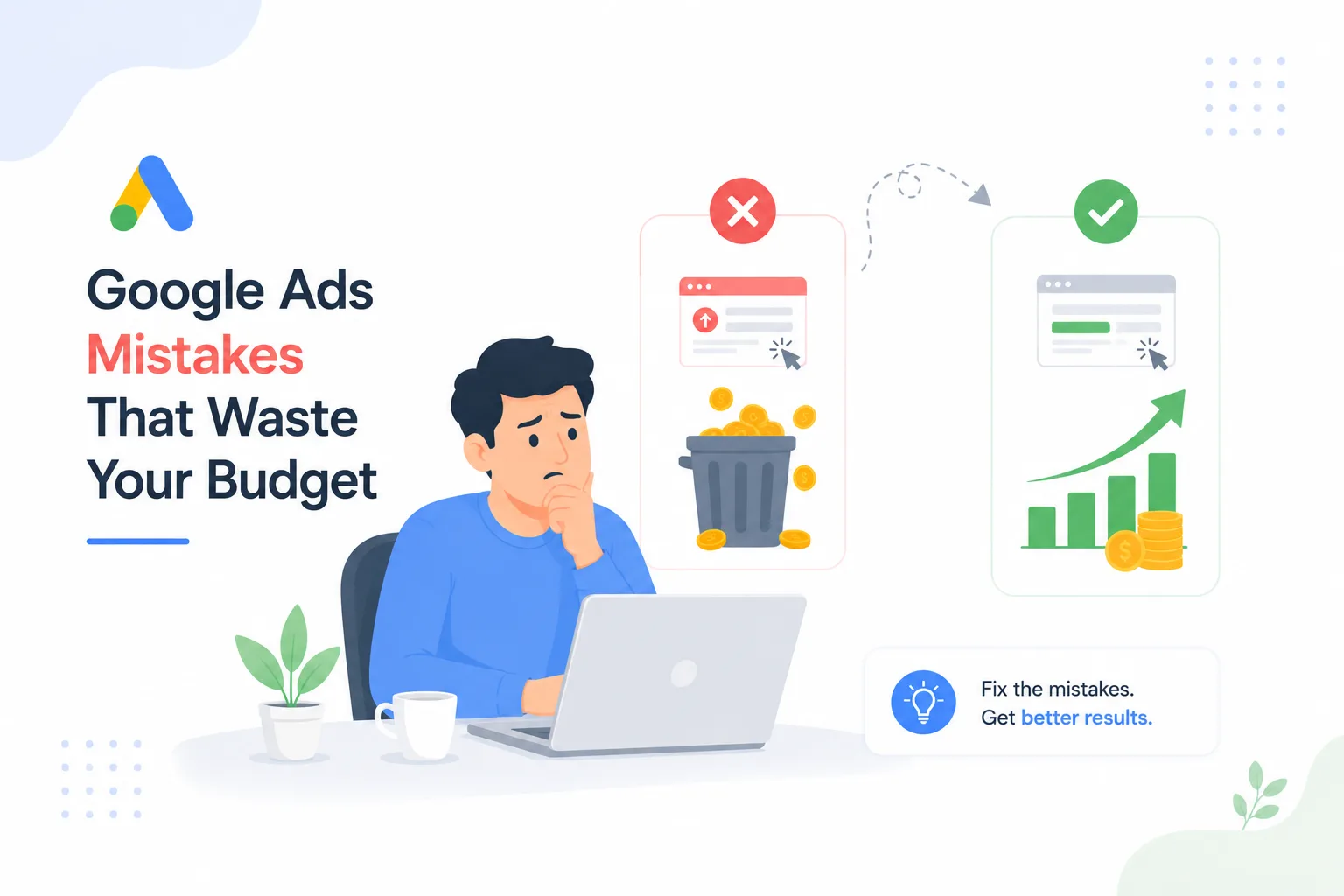
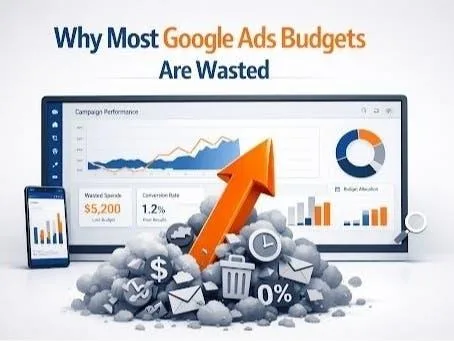
Google Ads is one of the most powerful digital marketing platforms available today. It helps businesses reach potential customers at the exact moment they are searching for products or services. However, many businesses invest significant amounts in Google Ads without seeing the expected results.
The problem is not always the platform itself. In most cases, poor campaign setup and optimization lead to wasted ad spend, low-quality leads, and disappointing returns on investment.
If you’re running Google Ads campaigns or planning to start one, avoiding these common mistakes can help you generate better leads, improve conversions, and maximize your advertising budget.
🔹Ignoring Negative Keywords
Many advertisers focus heavily on the keywords they want to target but overlook the importance of negative keywords. Without a proper negative keyword strategy, ads can appear for searches that are unrelated to business goals. Users searching for terms like “free,” “jobs,” “training,” or “courses” may click on ads despite having no intention of becoming customers. Over time, these unnecessary clicks can significantly drain advertising budgets.
For instance, if you offer paid digital marketing services, your ads may appear for searches like:
- Free digital marketing course
- Google Ads tutorial
- Digital marketing jobs
These clicks consume your budget without generating leads.
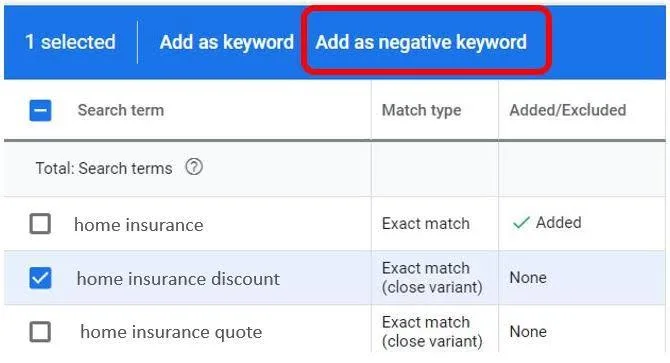
How to Fix It
Create a comprehensive negative keyword list and update it regularly.
Common negative keywords include:
- Free
- Jobs
- Internship
- Course
- Tutorial
- Download
Regularly reviewing search term reports can help eliminate irrelevant traffic.
🔹Sending Traffic to a Poor Landing Page
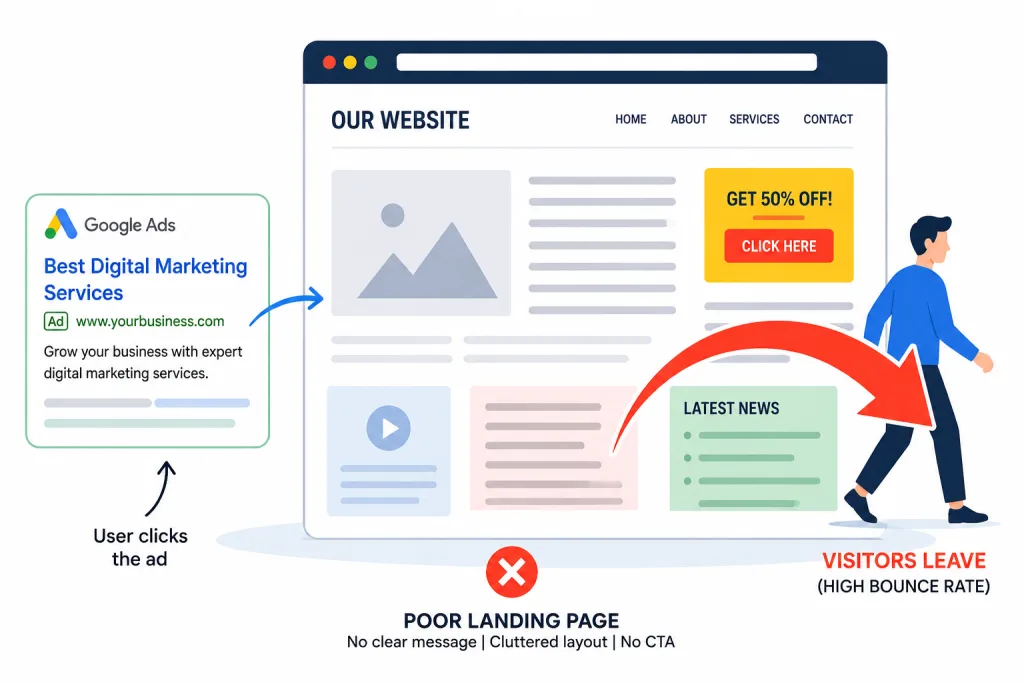
A successful Google Ads campaign depends not only on the ad itself but also on the landing page experience. Even if an ad attracts the right audience, visitors may leave immediately if the landing page is slow, confusing, cluttered, or lacks a clear message. A poor landing page creates friction in the customer journey and often results in high bounce rates and low conversion rates.
- Slow loading speed
- Confusing design
- Weak call-to-action
- Lack of trust signals
- Poor mobile experience
When visitors cannot quickly understand your offer, they leave without converting.
How to Fix It
Optimize your landing page by:
- Improving page speed
- Using clear headlines
- Adding strong call-to-action buttons
- Displaying testimonials and reviews
- Ensuring mobile responsiveness
A good landing page can dramatically improve conversion rates.
🔹Not Tracking Conversions
Many businesses monitor clicks, impressions, and traffic without tracking actual conversions. While these metrics provide useful insights, they do not reveal whether campaigns are generating leads, sales, phone calls, or other valuable actions. Without conversion tracking, advertisers have no clear way of determining which campaigns, keywords, or ads are producing real business results.
- Which keywords generate leads
- Which ads drive sales
- Which campaigns produce ROI

How to Fix It
Set up conversion tracking using:
- Google Ads Conversion Tracking
- Google Analytics 4 (GA4)
- Google Tag Manager
Track important actions such as:
- Form submissions
- Phone calls
- Purchases
- WhatsApp inquiries
Data-driven decisions always outperform guesswork.
🔹Using Broad Match Keywords Without Strategy
Creating a single ad and running it indefinitely limits the potential of a campaign. Different audiences respond to different messages, headlines, and offers. Without testing multiple ad variations, advertisers miss opportunities to discover which messaging resonates most effectively with potential customers. Relying on a single ad can prevent campaigns from reaching their full performance potential.
might trigger searches related to:
- Study abroad scholarships
- Free study abroad advice
- Immigration jobs
Many of these users may not be your target customers.
How to Fix It
Use a combination of:
- Phrase Match
- Exact Match
- Carefully monitored Broad Match
Review search term reports frequently to ensure relevance.
🔹Ignoring Mobile Users
A significant percentage of Google searches now happen on mobile devices.
Yet many businesses create campaigns and landing pages primarily for desktop users.
This leads to:
- Poor user experience
- Higher bounce rates
- Lower conversions
How to Fix It
Ensure your website:
- Loads quickly on mobile
- Has easy-to-click buttons
- Uses readable text
- Features simple forms
Test every landing page on multiple mobile devices before launching campaigns.
🔹Running Ads Without Audience Targeting
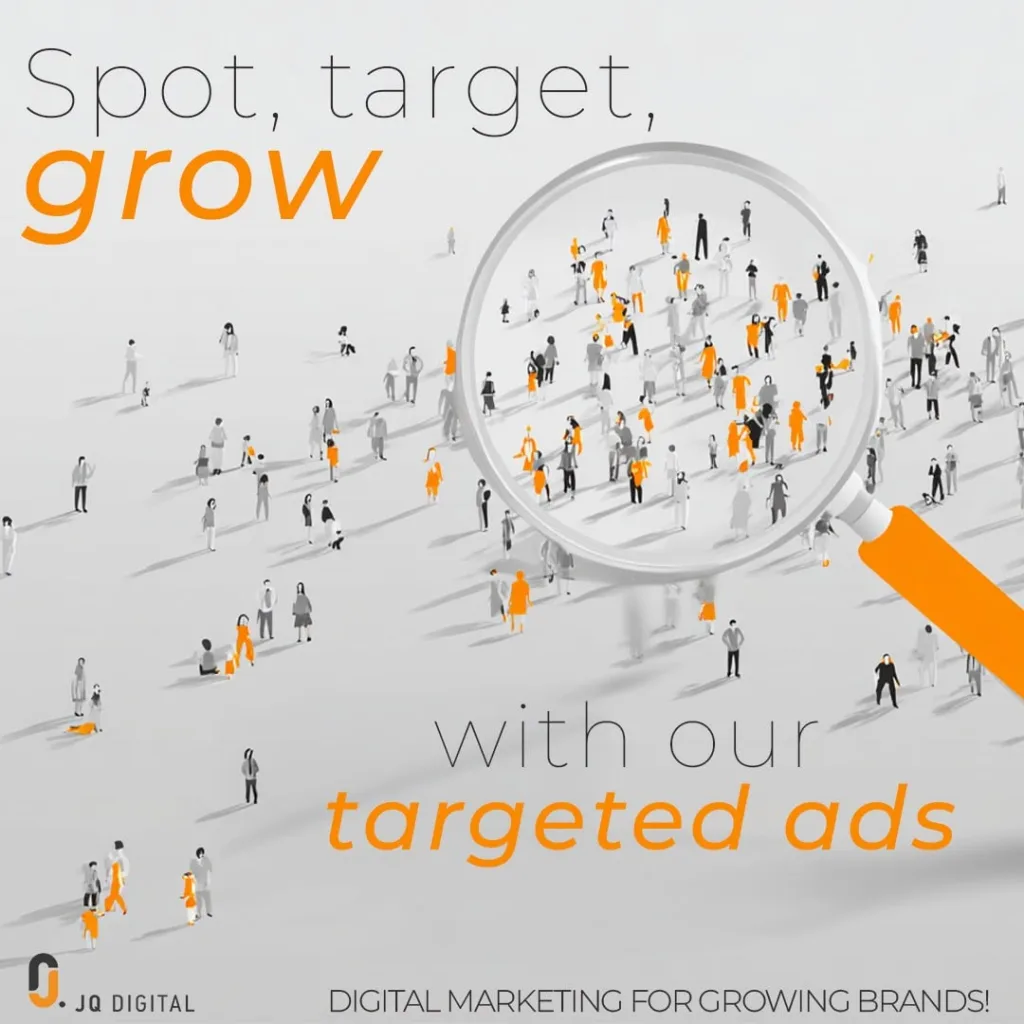
Keywords alone are not enough.
Google Ads offers powerful audience targeting options that many advertisers ignore.
Without audience targeting, ads may be shown to people who are less likely to convert.
How to Fix It
Use audience segments such as:
- In-market audiences
- Remarketing audiences
- Customer match audiences
- Website visitors
Combining keyword targeting with audience signals can improve lead quality significantly.
🔹Writing Weak Ad Copy
Many ads fail because they do not give users a compelling reason to click.
Poor ad copy often:
- Lacks benefits
- Uses generic messaging
- Fails to address customer pain points
For example:
“Best Digital Marketing Services”
is much weaker than:
“Generate More Leads with Expert Google Ads Management”
How to Fix It
Include:
- Customer benefits
- Strong call-to-actions
- Unique selling points
- Numbers and statistics when possible
Always create multiple ad variations and test them continuously.
🔹Not Optimizing Campaigns Regularly
Google Ads is not a “set it and forget it” platform.
Many businesses launch campaigns and leave them untouched for months.
Over time, performance can decline due to:
- Increased competition
- Rising CPCs
- Changing customer behavior
How to Fix It
Review campaigns weekly.
Monitor:
- Click-through rate (CTR)
- Conversion rate
- Cost per conversion
- Quality Score
- Search terms
Continuous optimization is essential for long-term success.
🔹Focusing Only on Clicks Instead of ROI
High traffic does not always mean high profits.
Some businesses celebrate thousands of clicks while generating very few sales.
The real goal is profitability, not traffic.
How to Fix It
Track metrics such as:
- Return on Ad Spend (ROAS)
- Cost Per Lead (CPL)
- Customer Acquisition Cost (CAC)
- Revenue Generated
Focus on campaigns that drive actual business growth rather than vanity metrics.
✨Final Thoughts
Google Ads can be one of the most effective lead generation channels for businesses. However, even a large advertising budget can be wasted if campaigns are not properly planned, tracked, and optimized.
By avoiding these ten common mistakes, businesses can:
- Reduce wasted ad spend
- Improve lead quality
- Increase conversion rates
- Achieve better ROI
- Scale campaigns more effectively
Success with Google Ads is not about spending more money. It is about making smarter decisions based on data, optimization, and customer intent.
If your campaigns are not delivering the results you expect, start by identifying which of these mistakes may be affecting your performance. Even small improvements can lead to significant gains in leads, sales, and overall return on investment.